Bridging Research and Policy for Effective Governance and Investment in England’s Visitor Economy

On 20 October 2025, I published my commentary “The Collapse of Visit Kent and Visit Herts: A Wake-Up Call for England’s Tourism Governance”, examining how fragmented governance structures and short-term funding cycles are undermining destination resilience across England.
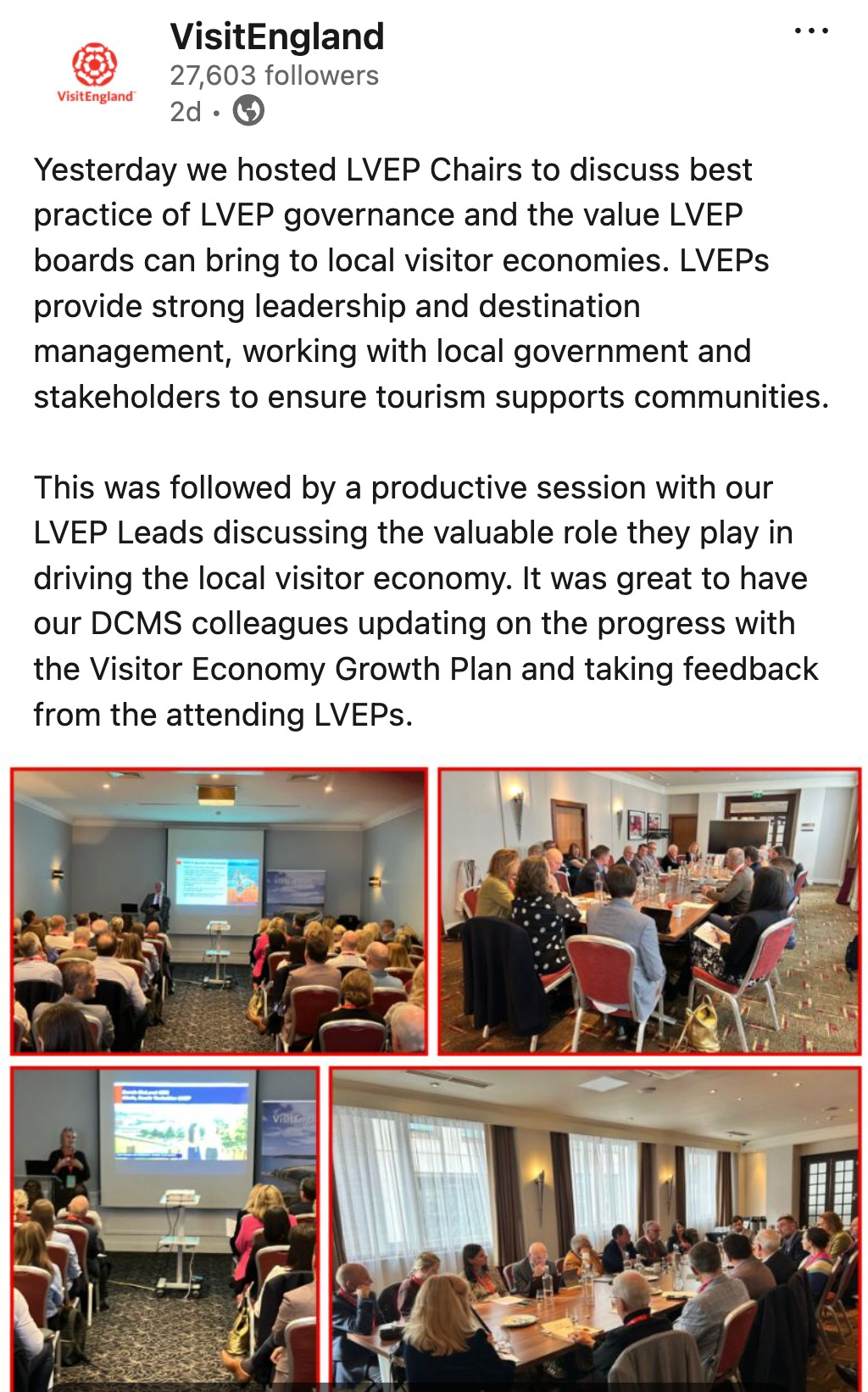
Coincidentally, on 21 October 2025, VisitEngland convened LVEP Chairs and DCMS officials for a national session on “Best Practice in LVEP Governance” — a discussion focused on the similar structural and strategic issues explored in my research. Its encouraging to see academic analysis and national policy conversations are increasingly converging around shared priorities for reform.
The LVEP (Local Visitor Economy Partnership) framework itself encapsulates many of the principles my doctoral and ongoing research address — namely, how strategy, stability, and place-shaping can be better embedded within destination governance models. The emphasis on governance boards, partnership accountability, and regional coordination signals a gradual shift away from purely marketing-led delivery toward more resilient, system-based governance — precisely the kind of transition required to strengthen England’s visitor-economy capacity.
This alignment between research and policymaking underlines two important lessons. First, academic work can provide timely, evidence-based insight that supports live policy challenges. Second, destination resilience depends not just on investment levels, but on how funding, governance, and leadership interact to absorb shocks and sustain growth.
The close sequence of these discussions illustrates the value of evidence exchange between research and policymaking — ensuring that tourism governance evolves on a foundation of data, critical reflection, and regional learning.